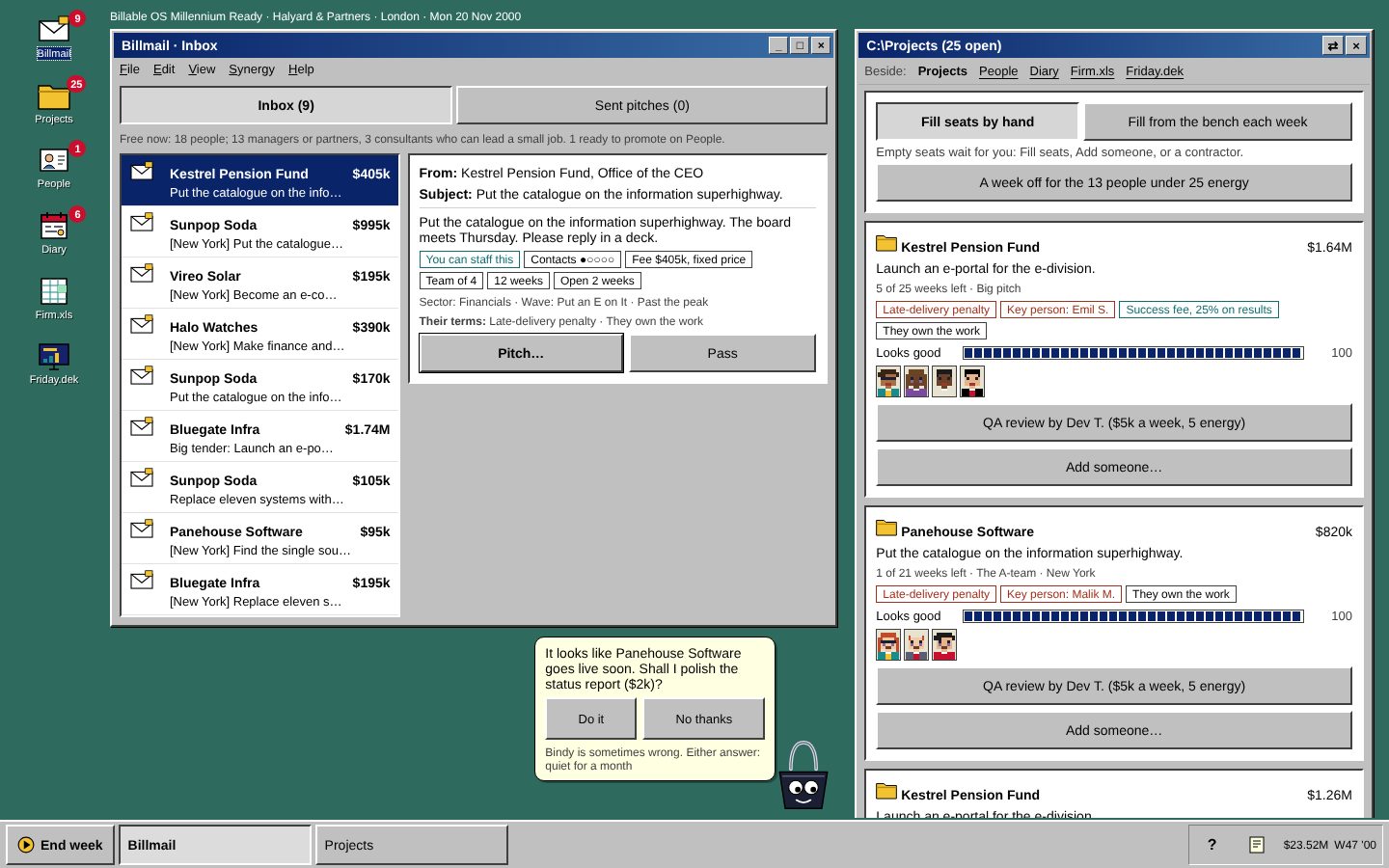
One week, one turn
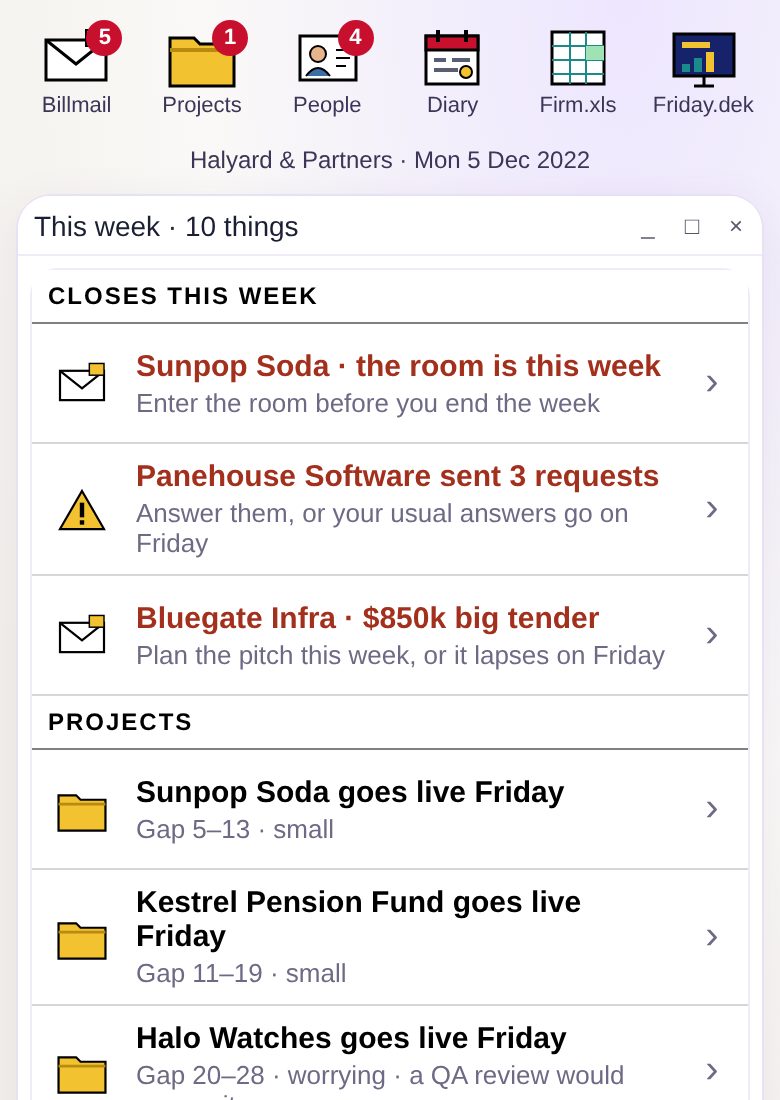
- BillmailTenders arrive. Some are small and fixed-price, some are big and pitched in three acts.
- PitchPick a crew and an approach. Lunch helps. So does a partner the client has heard of.
- Staff itSell first, staff later. Fill the seats from the bench, or with contractors at three times the price.
- Friday.dekThe week, in slides. The speaker notes say what really happened.
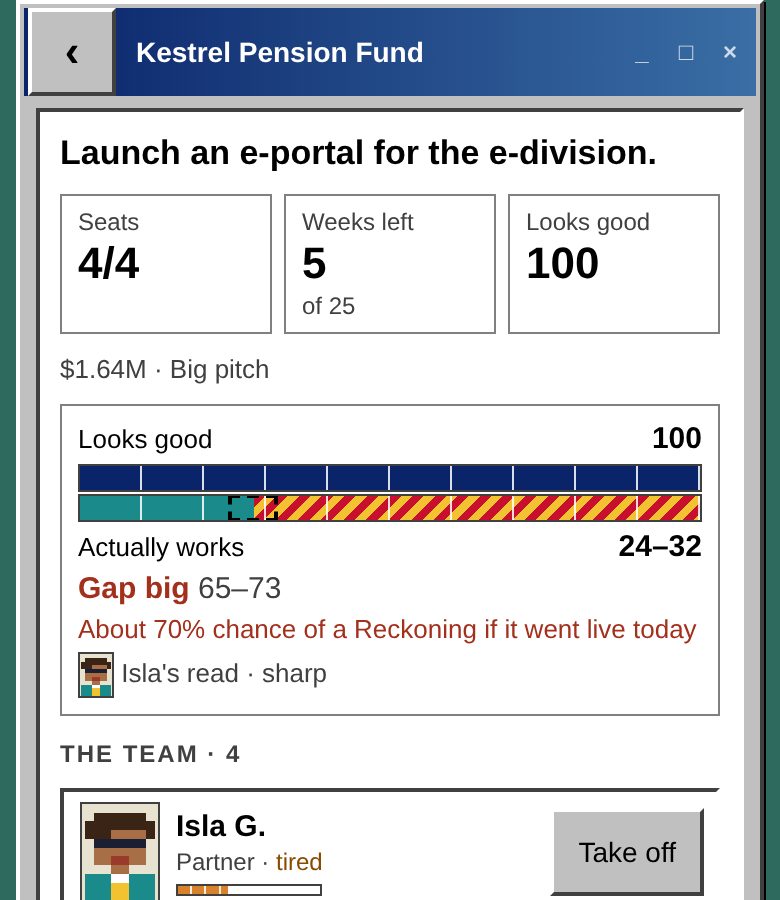
Looks good, and what actually works
Every project has two bars. Clients pay on Looks good: the deck, the workshops, the partner at the steering committee. Your reputation follows Actually works: whether the thing does what it says when it goes live.
The gap between them is Exposure. A small gap is consulting. A big one ends in a Reckoning, and the client tells everyone at the next conference.
Everything has a cost. A QA partner narrows the gap and burns a partner's week. A success fee pays when the work works and pleases Procurement. A key-person clause wins the tender and ties your best manager to one client until it goes live.
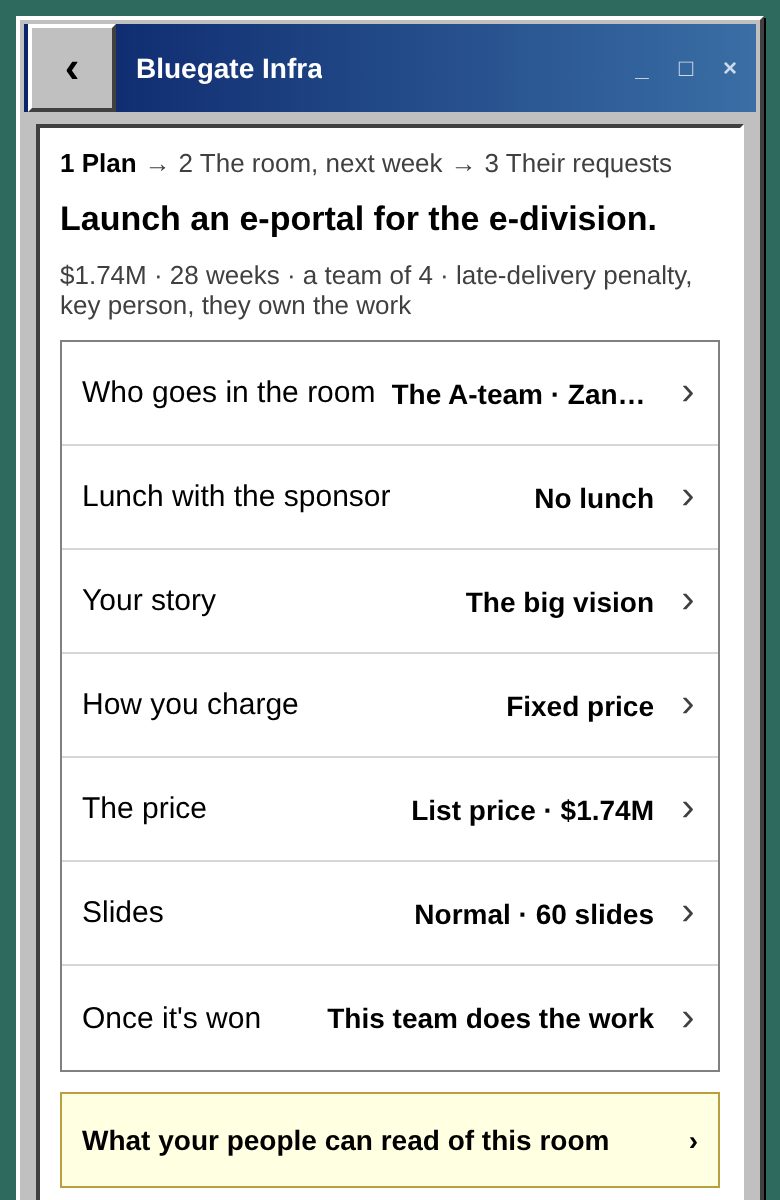
The big pitch, in three acts
About one tender in seven is big. You plan it: who is in the room, the angle, the price model, the price, how much prep. Then you face the room: three questions, one from each voice at the client. What your people can read of the room depends on who they are.
Then the client's requests: references, a start date, the contract. Bluff in the close and IT may check.
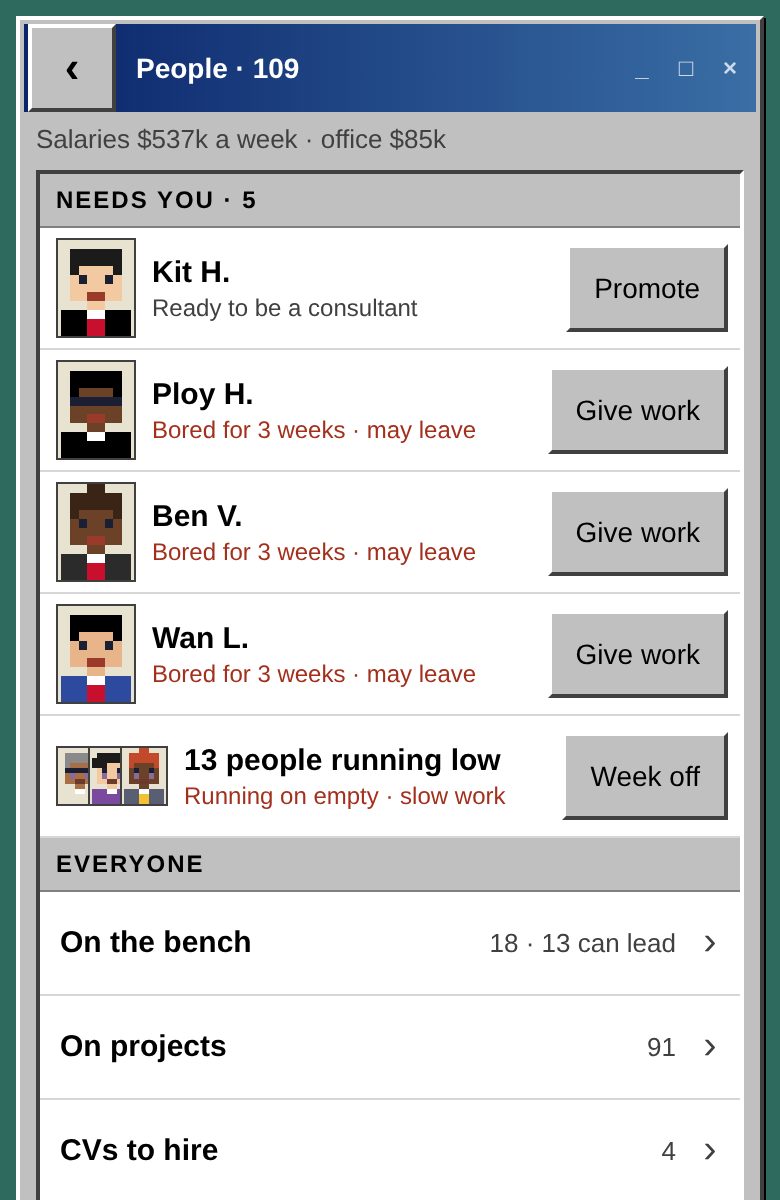
Your people are the product
Consultants, managers and partners, each with a skill, an energy bar, a trait and a record. Partners become known for sectors and waves, and a known name wins tenders on its own.
Tired people make mistakes. Bored people leave. Promote the ready ones, or a rival will. Open a second city, an academy, a venture arm; list on the exchange and answer to investors every quarter.
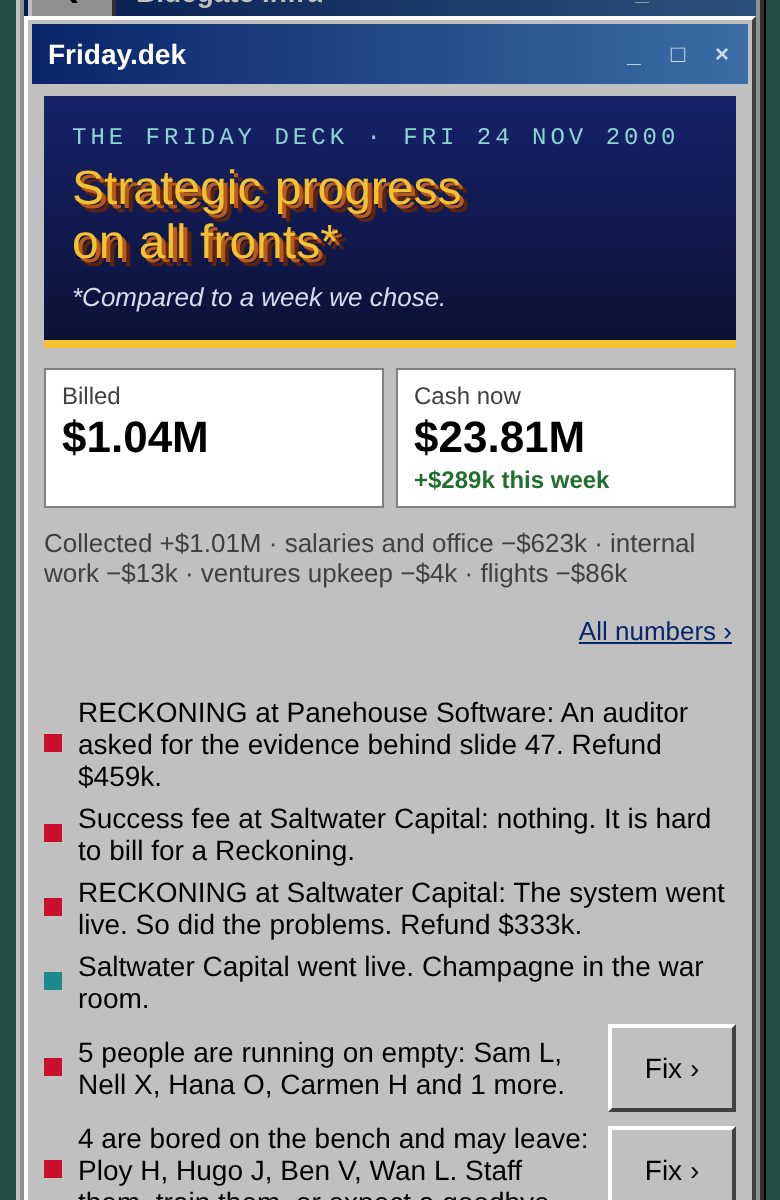
The Friday deck
Every week ends in slides. The headline always sounds like a good week. The figures are real, the news is mixed, and the speaker notes (do not show client) say what actually happened.
Bindy, the binder-clip assistant, offers help along the way. It always costs something, and it is sometimes wrong.
The office computer ages with history
The whole game is played on an invented office computer. Every sixteen months it updates itself, and every eight years it becomes someone else.
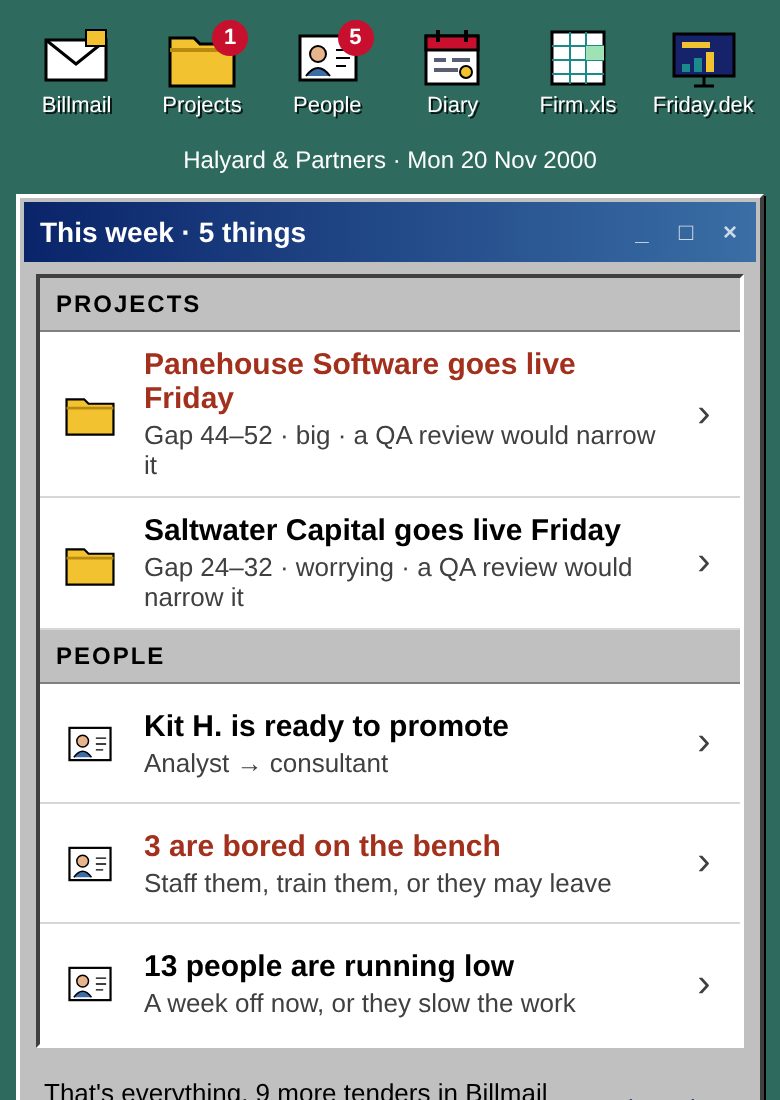 1998Bevelled grey. The Calendar Apocalypse, then Put an E on It.
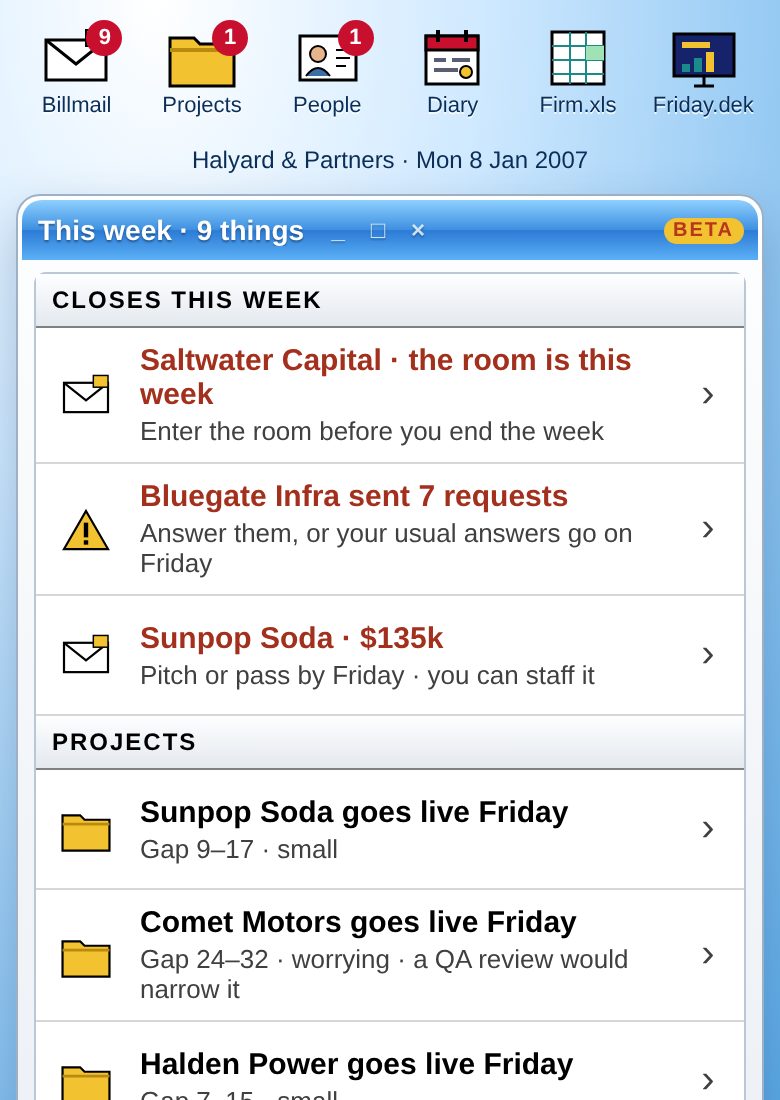 2007Glossy, and forever in beta. A Taxi App, but for Cement.
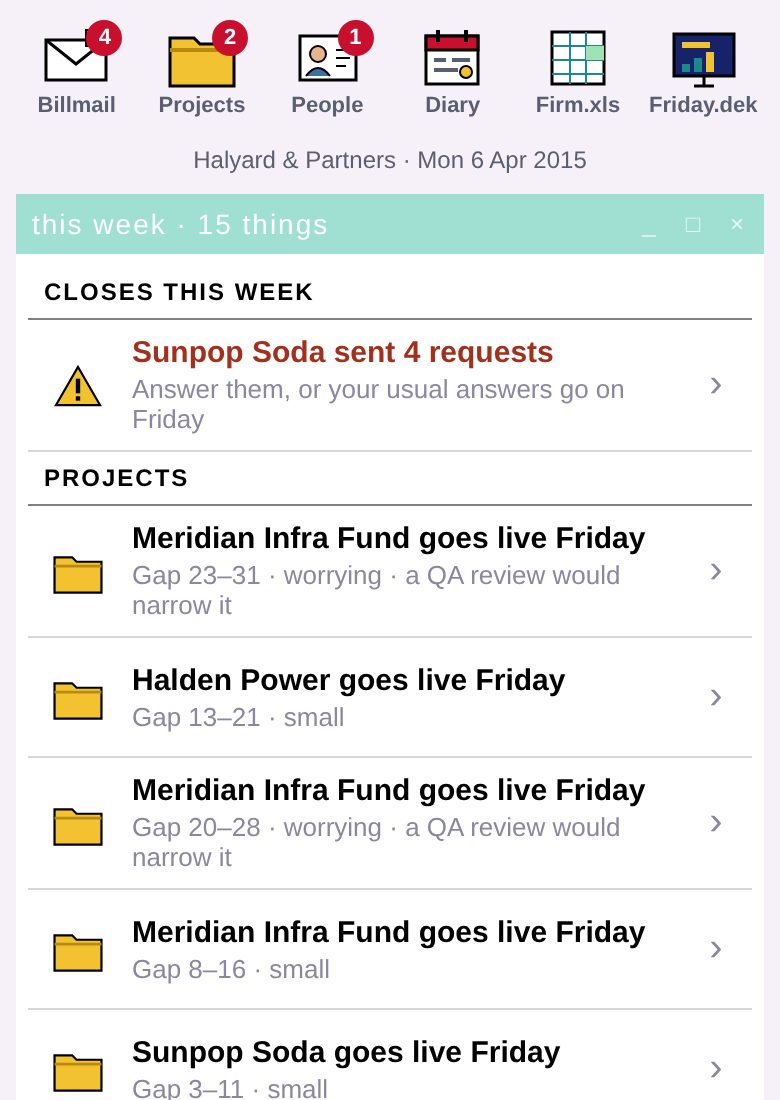 2014Flat, pastel and very thin. Transformation, Again.
 2022Everything is a chat box. Strap a Chatbot to It.
The closed test
Billable is in a closed test: a small group plays it while it changes every week or two. Places are by invitation.
- Get a codeWe send testers a code that looks like
FF-XXXX-XXXX-XXXX. - Log onContinue with Google: one Field & Fortune account for all our games.
- Type the code onceThen your firm is saved on this device and to your account.
What we record during the test: when a week ends, a band for your cash, how many staff and projects, which kinds of choices get made, and error reports. Never a name, your save, or anything you type. See the privacy policy.
Before you start
- What it costs
- Nothing during the test. All the money in it is the game's.
- Where it plays
- In the browser. On a phone, held upright, one window at a time. On a laptop, the desktop opens up: icons down the left and two windows side by side, so People sits next to Projects and the tender sits next to the inbox.
- On an iPhone
- An iPhone app is coming. Until then, open Billable in Safari, tap Share, then Add to Home Screen: it opens full-screen from its own icon, like an app. On Android, Chrome offers Install app from its menu.
- Your firm
- Saved in this browser after every week, and to your account once you have logged on, so you can carry on from another device.
- How long
- A week takes a minute or less. A firm runs for as long as it lasts: until you sell it, or it runs out of money.
- Is any of it real
- The hype is. Every firm, client, rival, product and person in it is invented.